Thinking About Studying in the UK? Read This First
- Brittany Davenport
- 0 comments
Moving to the UK to study can be exciting. New country, new opportunities, and for many students, a huge personal goal.
What often surprises international students is that the biggest challenge isn’t always the coursework itself, it’s adjusting to a completely different academic culture and communicating confidently in English every day.
Many students arrive with strong grammar skills and good IELTS scores, but still struggle with real-life communication, academic expectations, and understanding how university life works in the UK. If you’re thinking about studying in the UK, here are a few things you should know before you arrive.

1. UK universities expect independent learning
In many countries, education is more structured and teachers may guide students closely throughout assignments.
In the UK, universities often expect much more independence.
You may be expected to:
manage your own deadlines
complete large amounts of reading independently
participate in seminars
prepare for lectures in advance
-
ask for help when needed
Your lecturer may not constantly remind you about deadlines and this can be a shock for some students.
2. Critical thinking is extremely important
Many international students lose marks because they focus too much on describing information rather than analysing it.
In UK universities, lecturers often want to see:
critical thinking
evaluation
evidence-based arguments
independent opinions
Simply repeating information from textbooks is not enough.

3. Everyday English matters more than you think
Passing an English exam doesn’t always prepare you for daily life in Britain.
You may need English for:
opening a bank account
speaking to landlords
ordering food
understanding British accents
making friends
speaking in group projects
This is where many students realise textbook English feels very different from real spoken English.
4. British communication can be indirect
British people are often polite but also indirect.
For example:
“That’s quite interesting.” - this may not always mean they loved your idea.
“We should catch up sometime” - doesn’t always mean concrete plans.
Understanding tone and cultural communication helps a lot.

5. Making friends can take time
Many students expect friendships to happen instantly.
Sometimes it takes time to adjust socially.
Joining societies, attending events, and being proactive can really help.
How to prepare before moving to the UK
Before arriving:
practise real spoken English
improve listening skills
learn academic vocabulary
understand UK university expectations
build confidence speaking naturally
I have created a free resource called:
The International Student Academic Communication Guide – UK Edition
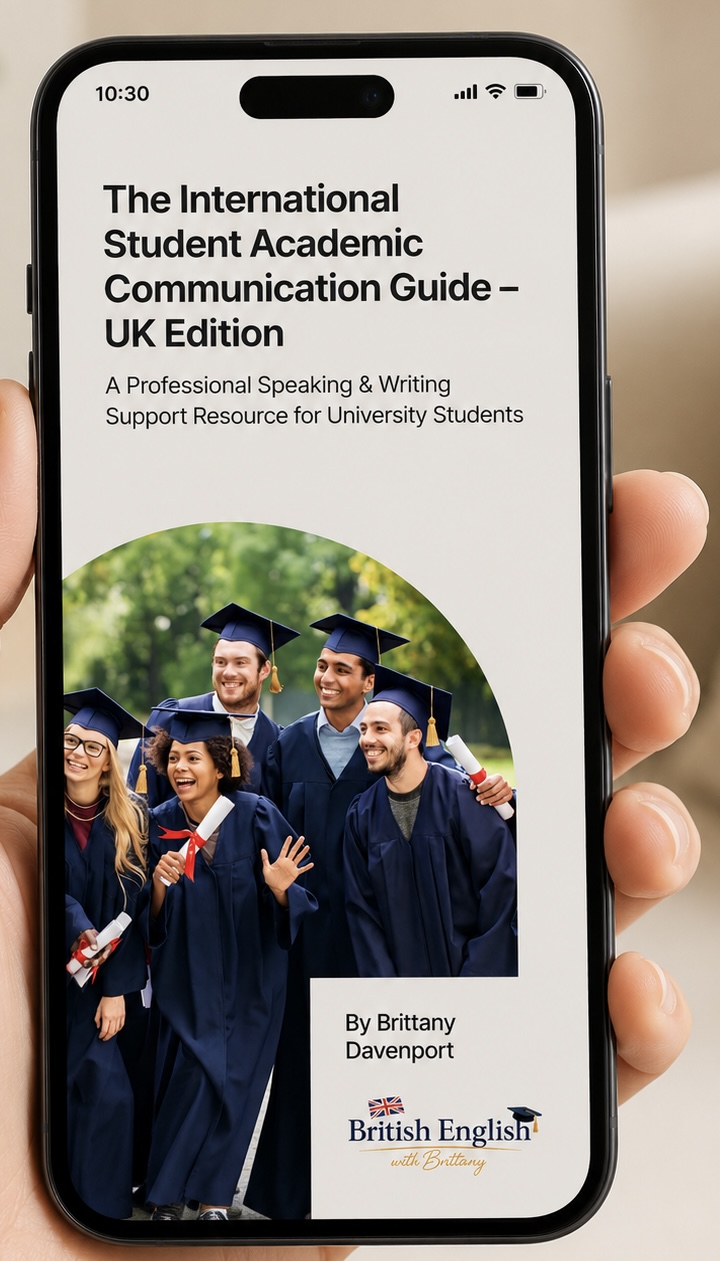
It covers common communication challenges international students face in UK universities.
https://www.englishwithbrittany.co.uk/students
Studying in the UK can be an amazing experience but preparation makes everything easier.
The more you understand academic culture and everyday communication before arriving, the more confident you’ll feel.