Shadowing Technique for English Learners: Does It Really Work?
- Brittany Davenport
- 0 comments
If you’ve been learning English for a while, you’ve probably heard people say “just practise speaking more.” Which probably isn’t very helpful, especially if you don’t have someone to regularly practise with.
A lot of learners know a lot of grammar rules, understand English when reading, and can even follow conversations… but when it’s time to speak, everything suddenly feels slow, awkward, or unnatural.
Sometimes it feels like, you know what you want to say but the words don’t come out smoothly.

This is exactly why many English learners start using the shadowing technique and I always recommend this to my students too. It can be incredibly effective when you do it properly and it’s also incredibly easy
In this blog, I’ll explain what shadowing is, why it works so well for speaking and pronunciation, when you should use it, common mistakes to avoid, and I’ll also share my YouTube shadowing videos you can practise with to get you started.
What actually is the shadowing technique?
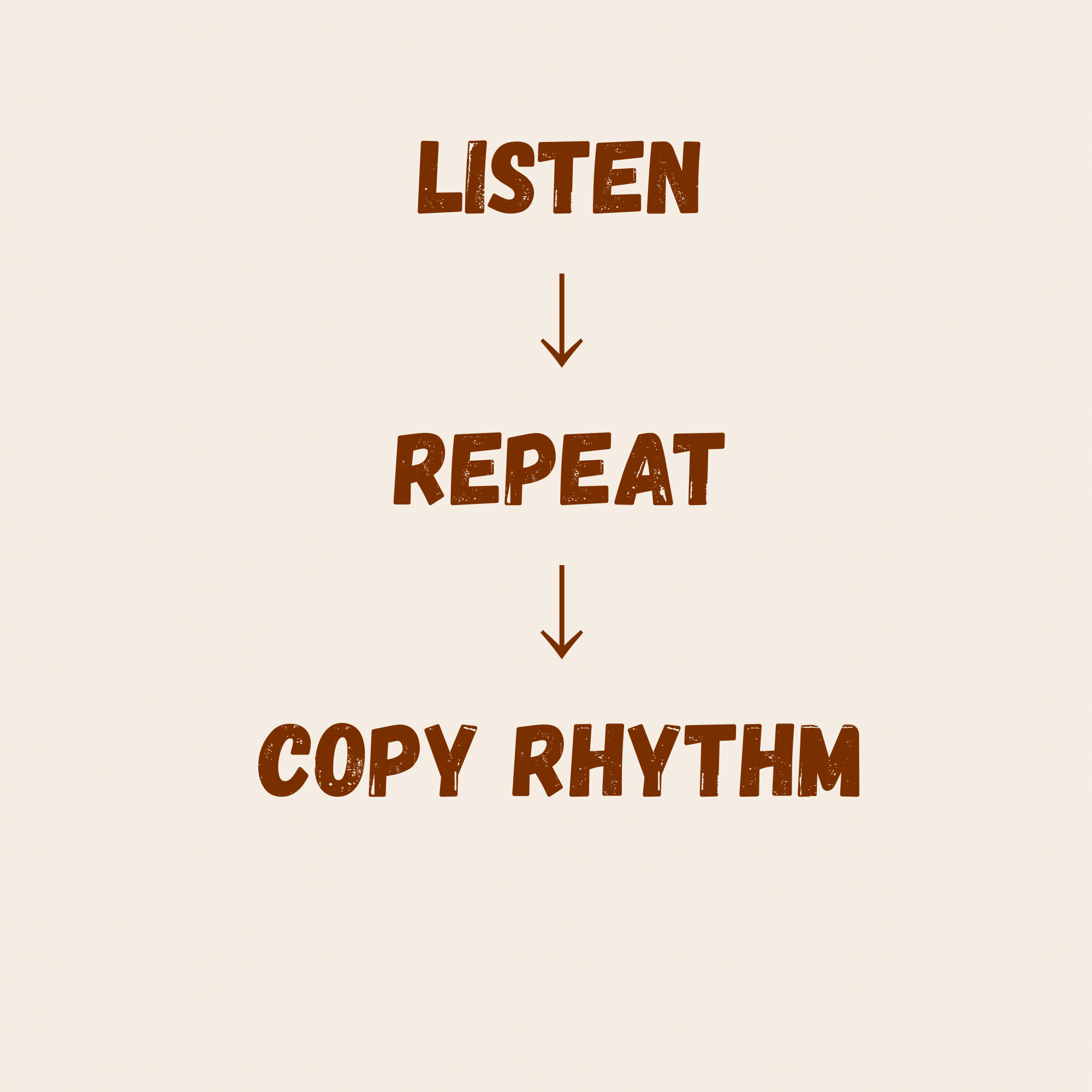
Shadowing is a speaking practice method where you listen to a native speaker and repeat what they say almost immediately. You’re essentially trying to “shadow” their speech in real time.
For example, if you hear:
“I’m actually thinking about going later.”
You immediately repeat:
“I’m actually thinking about going later.”
The goal isn’t to memorise the sentence. It’s to copy pronunciation, rhythm, stress, intonation, connected speech and sentence flow.
This helps you sound more natural because you’re training your mouth and brain to produce English in a more automatic way.
Why shadowing works so well
1. It improves pronunciation - Many learners pronounce words correctly on their own but struggle when speaking full sentences naturally.
Native speakers connect words:
What are you → Whatcha / What’re you
Going to → gonna
Want to → wanna

Shadowing helps your ears notice these patterns.The more you copy natural speech, the more familiar these pronunciation changes become.
2. It improves fluency - A lot of students translate from their first language before speaking. This slows everything down. Shadowing forces you to react quickly without overthinking grammar. Over time, this helps reduce hesitation.
3. It trains listening and speaking at the same time - This is why shadowing is so powerful. You’re not just listening passively. You’re actively copying real speech patterns while improving comprehension. It’s especially useful if you understand English in theory but struggle with fast native conversations.
4. It helps you sound more natural - Textbooks often teach formal English that people rarely use in real life.
Shadowing exposes you to natural phrases like:
“I’m not really bothered.”
“I’ll let you know.”
“That sounds good.”
“I’m just heading out.”
These are phrases native speakers use constantly, but learners don’t usually learn these terms at school or during classic English lessons.
Is shadowing effective for all learners?
Shadowing works best if you:
already understand basic English
want better pronunciation
want to improve fluency
struggle with natural speaking flow
-
want to sound more like native speakers
If you’re a complete beginner, shadowing may feel slightly overwhelming so I would suggest starting with slower audio first.

When should you practise shadowing?
Short daily practice works best, 10–15 minutes per day is long enough to make a big difference. Any longer can feel overwhelming and has the potential for you to lose tour focus. Consistency matters more than long study sessions.
How to practise shadowing properly
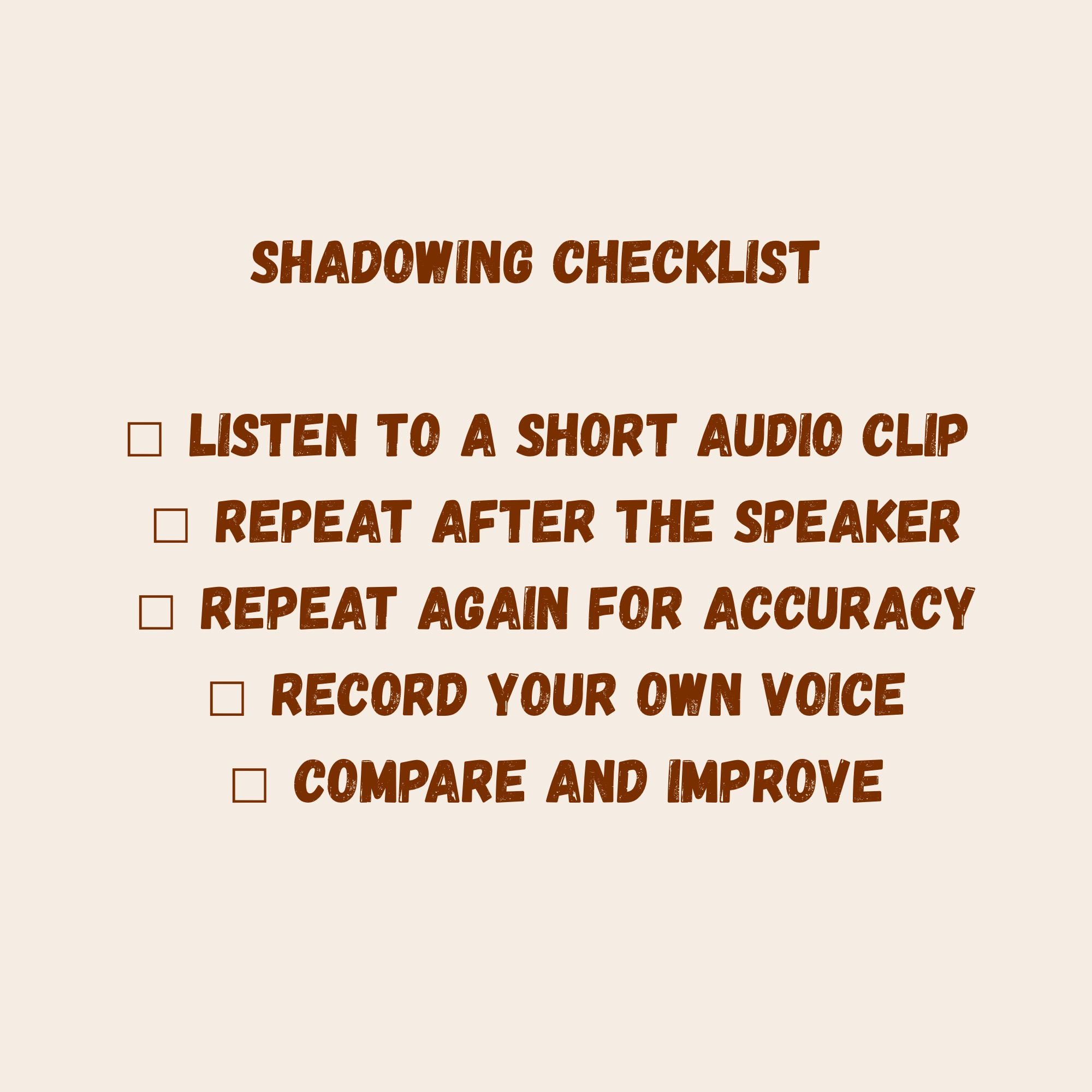
Step 1: Choose short audio clips
Start with clips under two minutes, I also recommend listening to something that interests you or a subject you enjoy learning about. You are far more likely to remain consistent with your new habit if it’s something you enjoy rather than something you find boring and don’t look forward to. Podcasts, interviews, YouTube videos, TV clips, or pronunciation videos all work well.
Step 2: Listen first
Understand the meaning before repeating. Don’t copy sounds you don’t understand.
Step 3: Repeat immediately
Try speaking along with the audio.Focus on rhythm and pronunciation.
Step 4: Repeat multiple times
Use the same clip several times until it feels natural.
Step 5: Record yourself
This helps you notice pronunciation mistakes.
Common shadowing mistakes
Choosing audio that’s too difficult
Fast movies with slang can be frustrating if your level isn’t ready. Start slow and simple.
Only copying individual words
Natural speech happens in chunks. Practise full sentences.
Being inconsistent
Doing shadowing once a week won’t help much. Daily repetition matters.
Focusing only on accent
Shadowing improves accent, but fluency and confidence are equally important.
British English shadowing practice videos
If you want guided shadowing practice, I’ve created YouTube videos designed specifically for English learners.
These videos help you practise:
pronunciation
connected speech
real British phrases
listening skills
fluency
You can start here:
Shadowing isn’t a magic fix but it is one of the most effective speaking techniques for improving pronunciation, fluency, and confidence. The key is practising regularly with the right material. If you’ve been feeling stuck with speaking, shadowing could be exactly what you need and if you want guided practice, check out my YouTube shadowing videos to get started.